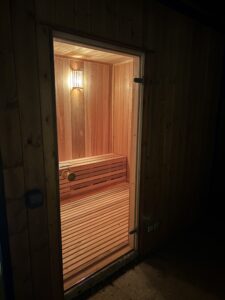
Garden saunas have become more popular than jam on scones. Why? A lot of it comes down to the rise of podcasts and viral videos. The Wim Hof craze opened people’s eyes to cold-water therapy, and that naturally led to an interest in saunas and steam. Before long, instead of paying for expensive gym memberships, people started realising it made more sense to create their own wellness space at home. Cold plunges, steam rooms and timber garden saunas have all become part of a growing trend across the UK.
For runners, gym goers and sport fanatics, saunas help you to recover quicker and reduce muscle fatigue. Outside of this, they also lower cortisol (the stress hormone) which helps with relaxation and stress relief. And if that is not enough, saunas also help with cardiovascular health, reducing blood pressure.
In this blog, we are going to cover everything you need to know before buying a garden sauna in the UK, including planning permission, recommended sizes, the different heat sources and insulation. There is a lot to cover, so this is a two-part blog. Part one covers everything listed, while part two covers costs, energy efficiency and the power needed to run a garden sauna (which is surprisingly little). If you are looking to buy a garden sauna UK wide, this is a good place to start.
Do You Need Planning Permission for a Garden Sauna?
Most garden saunas fall under permitted development, so you usually will not need planning permission as long as a few conditions are met:
- The sauna does not take up more than 50 percent of your garden
- It is placed behind the front wall of your house
- The building is under 2.5m high if it sits within 2m of a boundary
- If it is more than 2m from a boundary, it can go up to 3m (pent roof) or 4m (apex roof)
- You are building it on land you legally own
If your home is listed, or you live in a conservation area, the rules can be different. However, for most UK homes, saunas are allowed without planning.
Oh, and this should go without saying, but you need planning if you plan to use the sauna for permanent accommodation, such as sleeping in it. We would not recommend you buy a garden sauna for that, as it gets a bit warm.
What Size Garden Sauna Do You Need?
You can fit a garden sauna in the smallest of spaces. If you want a simple two-person sauna, then 1.8m x 1.8m is advised. For 4–6 people, we would recommend a 2.5m x 3m building. These sizes include an internal bench for you to sit on, alongside the heater, while still leaving you with plenty of room.
If you are planning on ordering an outdoor sauna cabin, you might also want to consider a cold plunge and/or steam room. Saunas mixed with cold plunges are great for heart health, muscle recovery and do wonders for your mental health, given the endorphin rush you get.
So if there is even the smallest possibility these are something you will want in the future, leave enough room for them before getting your garden sauna supplied and fit.
Electric vs Wood-Fired Saunas
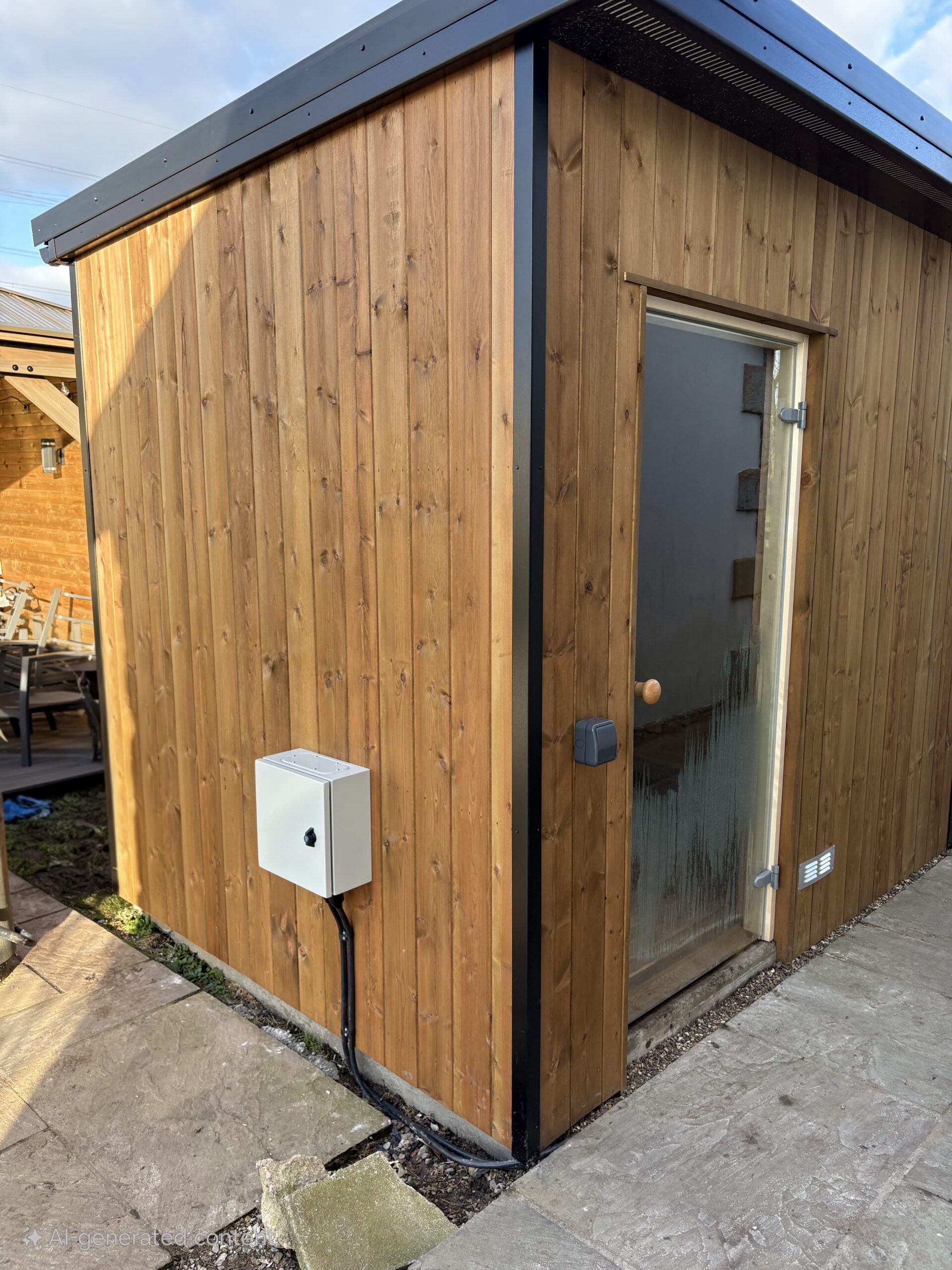
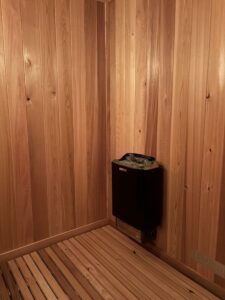
There are two main ways to heat a garden sauna: an electric garden sauna package or a wood-fired garden sauna package. Both work well, but they offer a very different experience. The right choice depends on your space, how hands-on you want to be, and the type of heat you enjoy.
Electric Garden Saunas
Electric heaters are the most popular option for garden saunas in the UK, mainly because they are simple to use and easy to control. You set your temperature, press a button and let the heater do its job. Electric heaters also warm up quickly, which is ideal if you like shorter sessions or want your sauna ready at a consistent time.
Benefits of electric saunas:
- Very easy to use
- Accurate control of the temperature
- Heats up fast
- Low maintenance
- Ideal for garden sauna designs inside a timber garden room
- Good for smaller saunas or daily use
Things to consider:
You will need the correct cabling from your house, along with a dedicated power feed from a qualified electrician. The heater size will determine the cable size, so if you plan on a larger sauna cabin, factor this into your design early on.
Wood-Fired Garden Saunas
Wood-fired saunas are for people who want the full, traditional experience. These are the saunas most people picture when they think of Scandinavian culture. Lighting the fire, feeding the stove, hearing the crackle and throwing water onto the stones gives you a totally different atmosphere to an electric unit.
Wood-fired saunas create a richer, deeper heat. The steam quality (also known as löyly) is better, the heat penetrates the skin more naturally and many people find it does more for their mental wellbeing. There is also no need for electricity, which is helpful if your sauna is positioned far from the house or you want something completely off-grid.
Benefits of wood-fired saunas:
- The most authentic sauna experience
- Better steam quality and a softer, more natural heat
- Often reaches higher temperatures than electric heaters
- Holds heat for longer sessions
- No running costs if you already have firewood
- Ideal for larger garden saunas or wellness spaces
- Works well for outdoor sauna cabins positioned away from the home
Things to consider:
A wood-fired sauna needs a chimney or flue. This is normal for all wood-burning stoves, but it does mean thinking about ventilation, smoke direction and the final height of the flue. You will also need more space than an electric sauna and a suitable storage area for logs.
If you would prefer a bespoke garden sauna builder to help you decide, our team can walk you through both options.
Insulation and Vapour Barriers: Why They Matter in a Garden Sauna
Heating a timber sauna is one thing. Keeping it warm is another. That is where your insulation and vapour barrier come into play, and why they are just as important as the heaters themselves.
A well-designed sauna should trap heat, manage moisture and protect the timber structure through years of prolonged use. This is where many cheaper garden sauna kits for sale fall short (and why they do not last very long).
What Insulation Do You Need for a Garden Sauna?
A proper sauna uses high-quality mineral wool insulation. Mineral wool handles high temperatures well and helps the sauna heat up efficiently. It keeps the hot room warm, protects the internal structure and prevents unnecessary heat loss.
Some budget kits use foam insulation instead of mineral wool, but foam does not cope well with the heat of a sauna. In the worst case, it can warp, melt or give off fumes. This is why professional sauna builders avoid it entirely.
At Browns, every premium timber garden sauna is built with insulation that is designed for constant high heat, so your sauna warms up quickly and stays warm for longer sessions.
Do I Need a Vapour Barrier in a Sauna?
Yes. A vapour barrier is essential. Saunas produce huge amounts of moisture and without a proper vapour barrier that moisture will seep into the walls, roof and structure of the building. Over time, this can create rot, mould and expensive repairs.
A vapour barrier stops moisture escaping the hot room. The most reliable option is an aluminium foil vapour barrier, which reflects heat back into the sauna and keeps everything sealed.
Without a vapour barrier, your sauna may look good at first, but it will not stay that way for long. This is one of the main reasons people choose a bespoke garden sauna builder instead of a flat-pack kit.
Moisture Management Beyond the Hot Room
Moisture does not just stay inside the sauna cabin. It also escapes when you open the door or when you come out of the sauna after a session. This is why a garden sauna needs:
- Smart ventilation that removes moisture without losing all the heat
- Durable cladding and a solid base that can handle changing temperatures
- Good airflow under and around the building
A sauna is not a regular timber garden building. It needs to be designed specifically for heat, steam and moisture. When this is done properly, your sauna will stay warm, energy efficient and structurally sound for years to come.
Final Thoughts on Designing the Perfect Garden Sauna
There is a lot to think about before installing a garden sauna, especially if you want it to stand the test of time. That is why it is so important to speak to a professional before making any decisions. The last thing you want is to buy something cheap and flat-pack that starts falling apart in a few years and barely gets warm enough to make you break a sweat.
We offer free site surveys and consultations. So if you are looking to get a garden sauna quote, or book a garden sauna site survey, you can contact our professional team for a no-obligation chat by clicking the button below. If you need garden sauna installers near me or want advice before you order outdoor sauna cabin options, we are here to help.